History

Six years building game capture.

ZENOS is a real-time game data technology company, founded in 2020 as Virtex Entertainment. We started by rebuilding live esports matches in 3D, which meant reading the full state of a running game, frame by frame. That capture technology now produces ground-truth training data for AI, as ZENOS Data.

Company record
Founded2020, as Virtex Entertainment
Renamed2024, ZENOS
Legal entityZENOS Interactive Ltd
Capture stackPRISM + VTX, since 2022
Open sourceVTX, Media Engine
TodayZENOS Data
Timeline

From virtual stadiums to training data.

  1. 2020

    Founded as Virtex Entertainment

    Building a virtual stadium so esports fans could watch a match from inside it.

  2. 2021

    Virtex Stadium opens in beta

    Real-time 3D esports viewing, with avatars and social features.

  3. 2022–23

    PRISM and VTX

    Live state capture and an open format for game state, built and tested across several titles. The stadium hosts its first live events.

  4. 2024

    Renamed ZENOS

    One name for the wider platform: Game Twins, Director and Player.

  5. 2025–26

    Open source and early access

    VTX and Media Engine open-sourced. Director and Player in early access with game and event partners.

  6. 2026

    ZENOS Data

    The capture stack applied to licensed games, as ground-truth data for AI. Public since 25 August 2026.

What we built

Capture once, build anything.

Everything ZENOS built read from the same place: live game state, captured once with PRISM and written to VTX, an open format. Game Twins rebuilt the match in Unreal Engine 5, and every product ran on top of them. Director and Player reached early access with partners.

What it looked like

What fans and partners saw.

Virtex Stadium ran live events for fans in beta. Director, Player and the venue work went to partners in early access.

6+Titles captured to VTX
95%Cheaper than video by streaming game state
4Apps built on one Game Twin

Figures as of 2026.

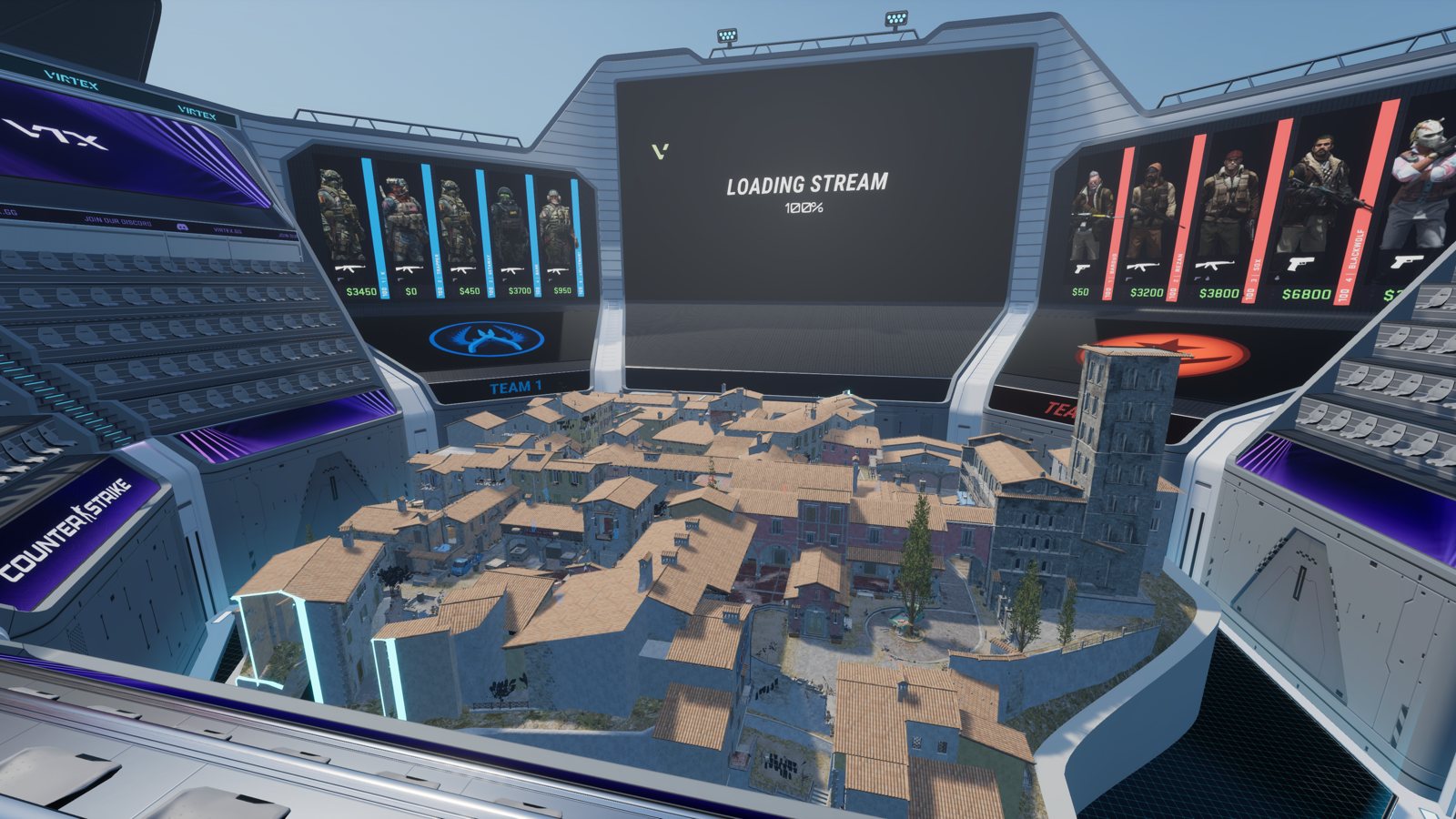
A Counter-Strike map rebuilt in 3D inside the stadium arena, with both team rosters on the boards
Stadium · Counter-Strike integration

The whole map, rebuilt in 3D in the middle of the arena, playing out the match as it happened. Fans could watch from the stands or drop into the map beside the players.
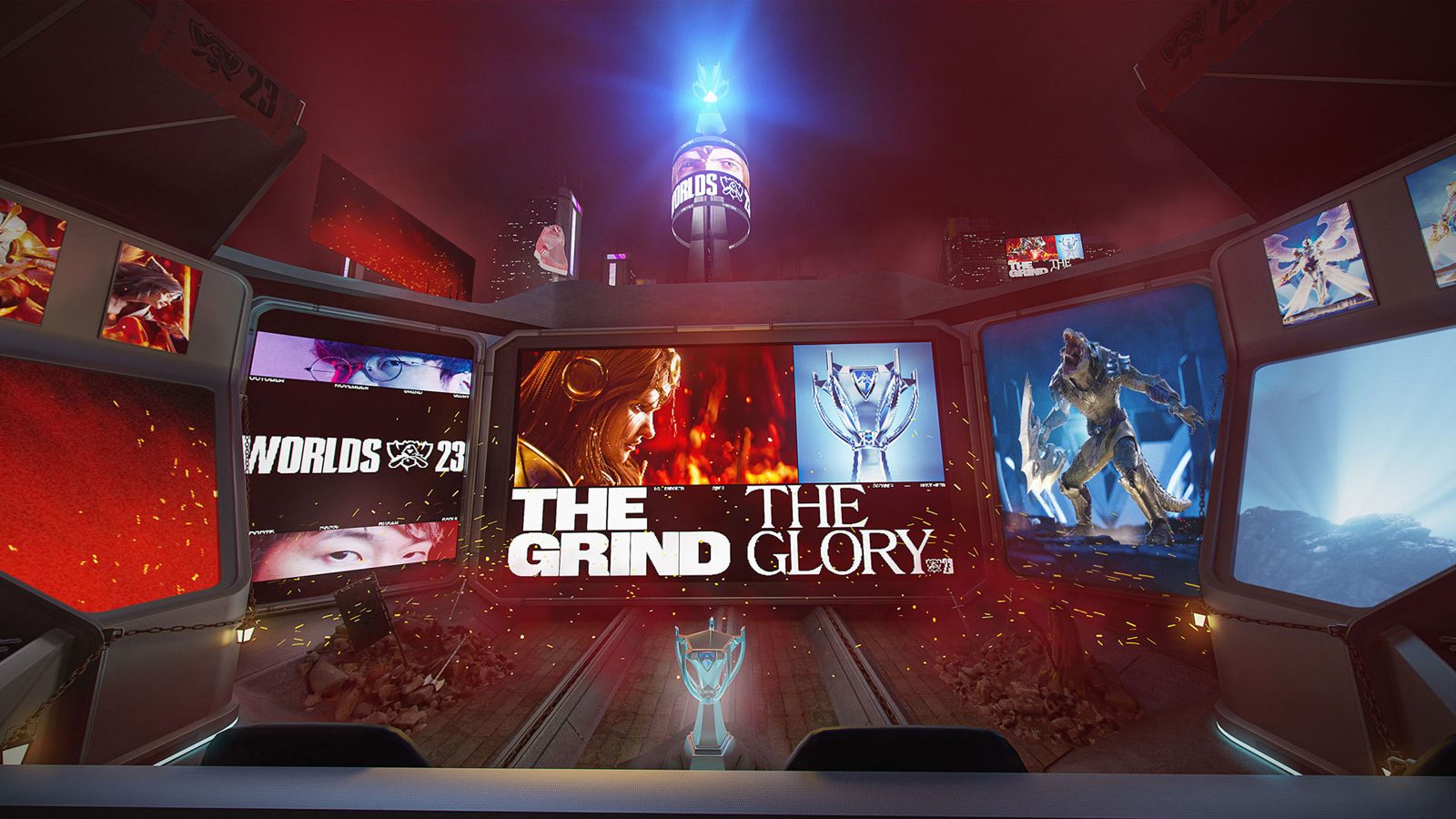
The stadium lobby dressed for League of Legends Worlds 2023, with screens and the trophy
Stadium beta · LoL Worlds · Nov 2023

In collaboration with Riot Games, fans watched Worlds together in a virtual stadium dressed for the event, from the quarterfinals to the final.
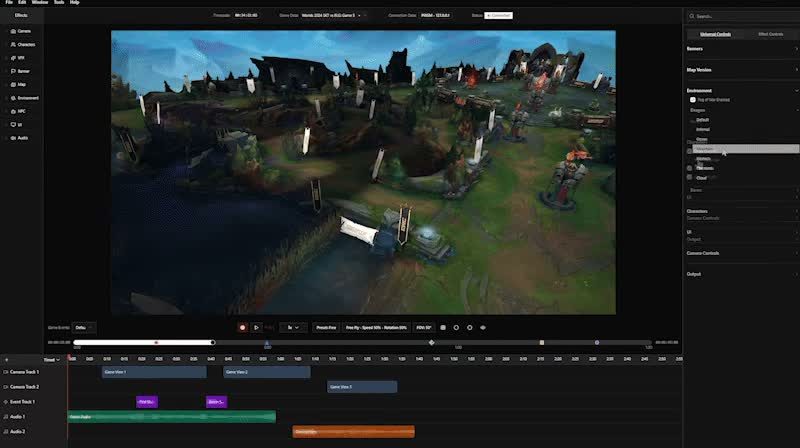
Early access · Zenos Director

Camera and replay control on a Game Twin, built for broadcast teams. The first professional grade virtual production for esports titles ever produced. 

Early access · Zenos Player

A match as playable 3D experience on web, mobile or desktop. Instead of flat video players were able to participate in a real 3d experience inside the game.
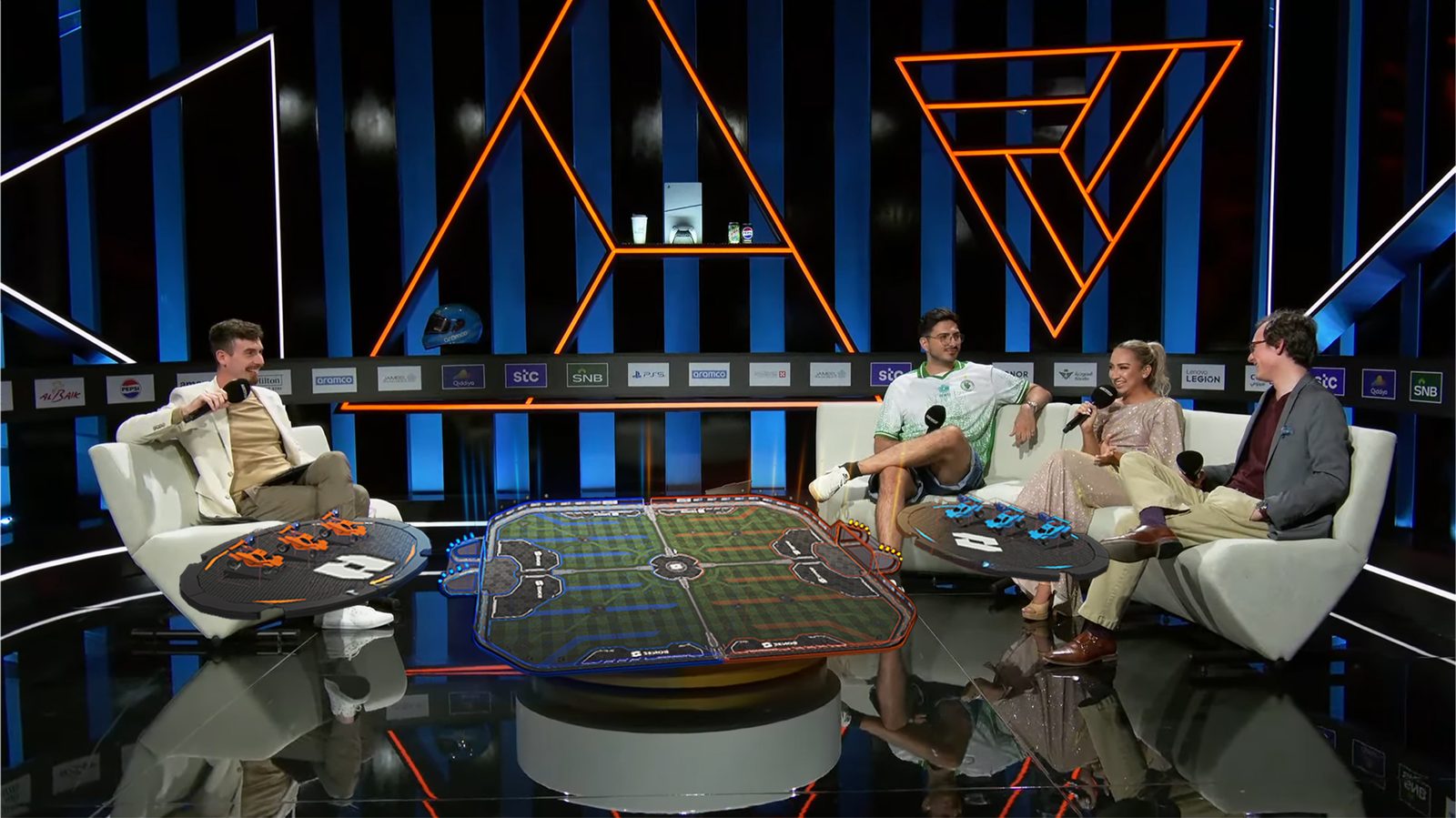
Analysts on a set beside a holographic table showing a match
Early access · Holographic table

An AR tabletop view of a match for an analyst desk, driven by captured game state.
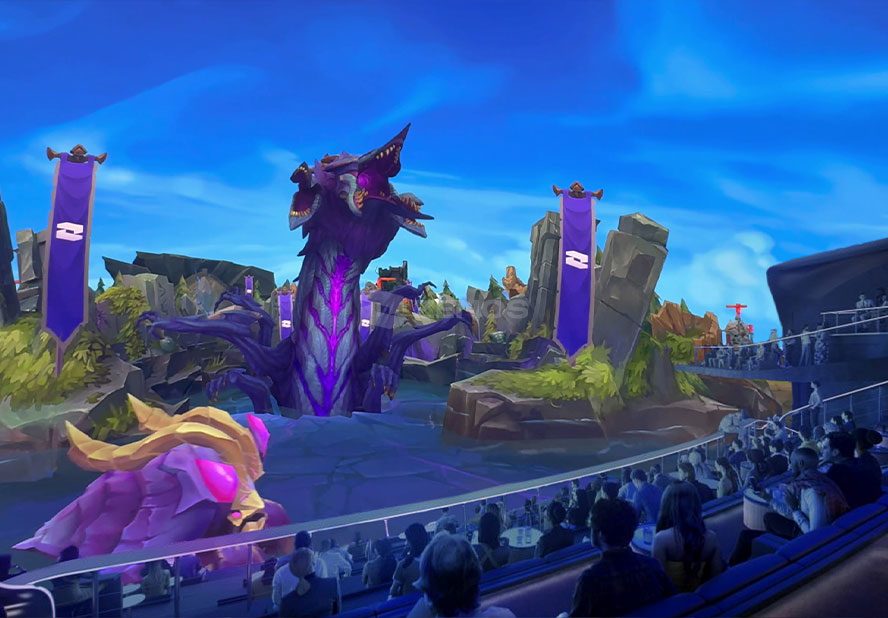
A match re-rendered on a dome screen above an audience
PROOF OF CONCEPT · DOME WATCH PARTIES

The ability to take live games outside of the original viewing experience and render them for large scale dome displays, a new kind of fan watch party.

Engines

One approach across very different engines.

Capture had to work on whatever a game was built with. PRISM ran on commercial engines and studios' own, and VTX gave all of them one schema: a shared vocabulary for entities, transforms and events, with per-title detail layered on top.

  • Unreal EngineCommercial
  • Source 2Commercial
  • HextechStudio in-house
  • RE EngineStudio in-house
  • Custom enginesStudio in-house
VTX One schema, every engine
Generic layer
Entities, transforms and events, read the same way from any title.
Contextual layer
Per-title and per-genre detail, for tools that need it.
What carries over

What ZENOS Data inherits.

The format

VTX is the format the ZENOS Data catalogue ships in. It stays open under Apache-2.0, with a public spec and reference reader.

VTX on GitHub →

The capture

Capture built to work across engines now runs title by title. Every title in the catalogue is captured under a direct licence with its owner.

How licensing works →

The discipline

Building for live viewing meant capture had to be frame-accurate and low-latency. The same bar applies to every session we deliver.

What labs get →

Build on real worlds.

Building frontier AI?Talk to us →
Have a catalogue?List Your Games →